Closed Loop Stepper Motor About
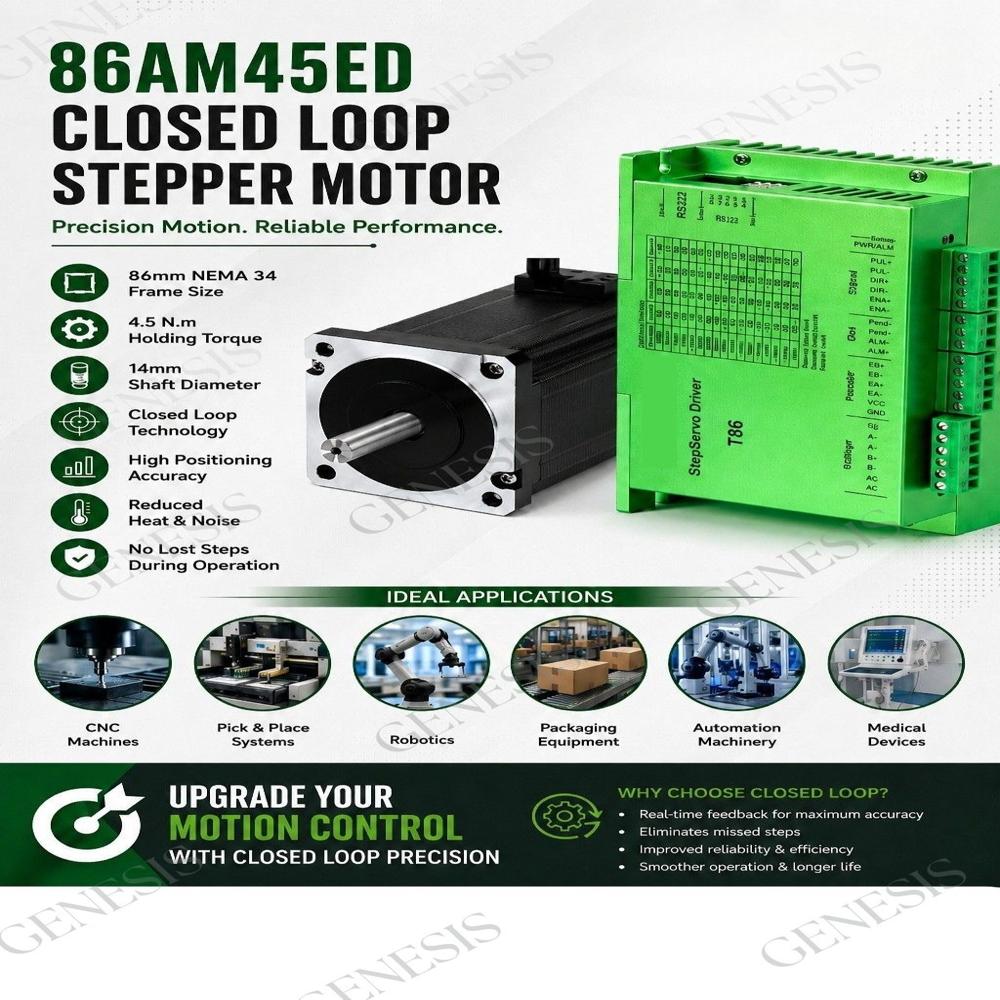
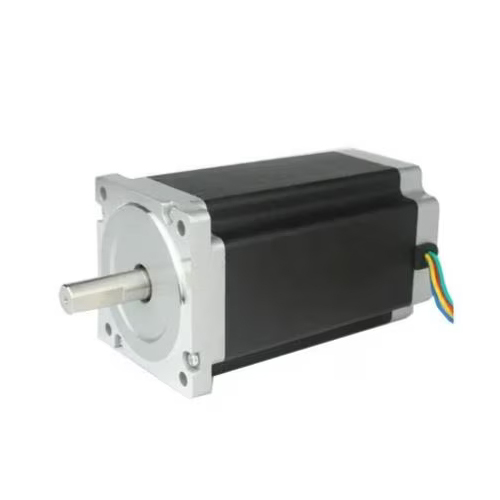
A closed-loop stepper motor is a stepper motor system that uses feedback from an encoder to continuously monitor the motor's actual position and compare it with the commanded position.
How it works
A closed-loop stepper system consists of:
- Stepper motor provides precise incremental movement.
- Encoder measures the actual shaft position.
- Closed-loop driver/controller compares commanded position with encoder feedback and corrects any error.
The control process is:
- Controller sends a movement command.
- Motor moves.
- Encoder reports the actual position.
- Driver detects any position error and automatically compensates.
Advantages over open-loop steppers
| Open-Loop Stepper | Closed-Loop Stepper |
| No position feedback | Uses encoder feedback |
| Can lose steps without detection | Detects and corrects lost steps |
| Higher risk of stalling | Better stall resistance |
| Runs hotter due to constant current | Often more efficient |
| Limited high-speed performance | Better torque at higher speeds |
Benefits
- Higher positioning accuracy
- Reduced risk of missed steps
- Lower heat generation
- Smoother operation
- Improved reliability under varying loads
- Can provide alarms if position errors exceed limits
Typical applications
- CNC machines
- 3D printers (high-performance models)
- Pick-and-place machines
- Packaging equipment
- Robotics
- Automated manufacturing systems
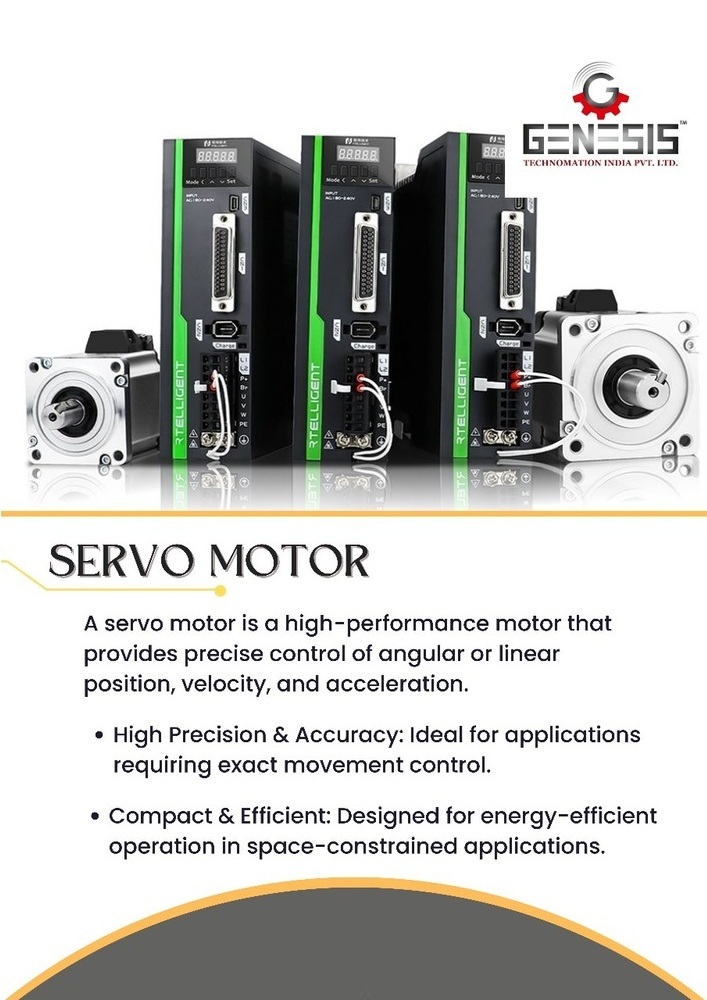
Closed-loop stepper vs servo motor
Closed-loop steppers and servo motors both use feedback, but:
- Closed-loop steppers are generally less expensive and provide excellent low-speed torque.
- Servo motors typically offer higher speeds, smoother motion, and greater efficiency for demanding industrial applications.
Exceptional Feedback PrecisionEquipped with a high-resolution incremental encoder (1000-2500 PPR), this closed loop stepper motor ensures reliable position feedback for accurate motion control. This attribute makes it ideal for applications demanding high precision, minimizing errors and ensuring consistent performance even in complex automated systems.
Robust Performance in Challenging EnvironmentsDesigned for resilience, the motor operates effectively in ambient temperatures from -20C to +50C and relative humidity below 90%. With an IP54 rating, sealed bearings, and protective features against overload, overheating, and short circuits, it delivers durability and stability even in harsh industrial environments.
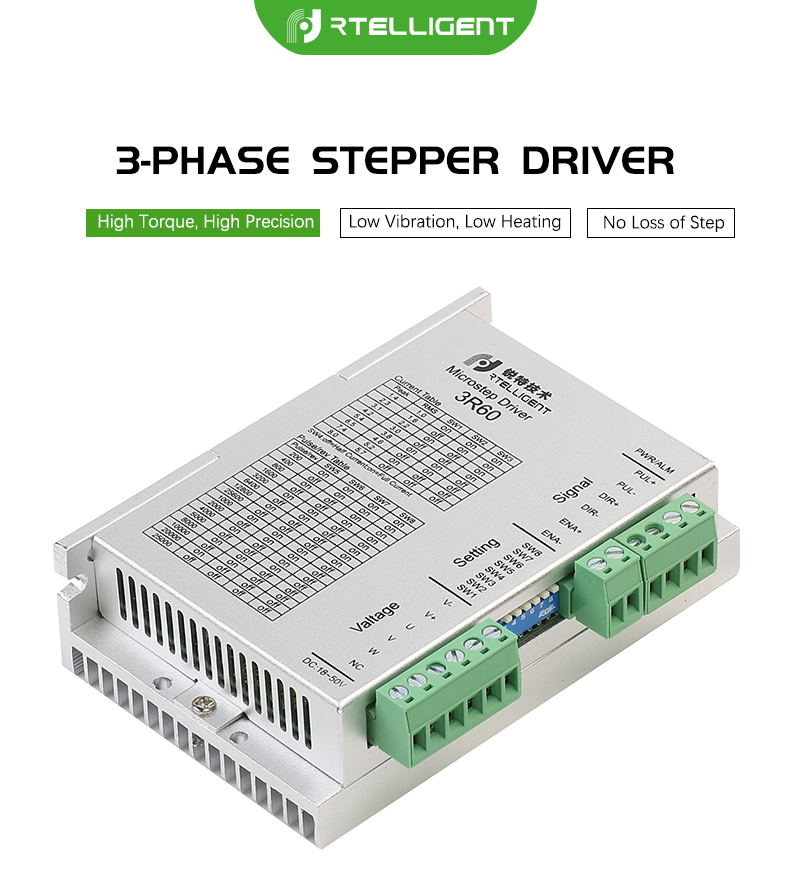
Flexible and Efficient IntegrationThe motor supports both traditional Pulse/Direction signals and RS485 communication, allowing easy integration with modern and legacy control systems. Optional drive inclusion broadens adaptability, while its flange mounting and compact dimensions facilitate seamless mechanical installation in various equipment.
FAQ's of Closed Loop Stepper Motor:
Q: How does the incremental encoder enhance the performance of the closed loop stepper motor?
A: The incremental encoder with 1000-2500 PPR provides precise position feedback, enabling the control system to monitor and adjust the motor's position in real time. This feedback loop minimizes positional errors and increases overall motion accuracy in applications such as CNC machinery and robotics.
Q: What are the key benefits of using this motor in automated equipment and packaging machinery?
A: Its high precision, fast response time (<50 ms), energy efficiency, and robust protection features ensure reliable, consistent operation. These characteristics help maintain high productivity, reduce downtime, and minimize maintenance for automated equipment and packaging machinery.
Q: When should the optional drive be included with the stepper motor?
A: The optional drive should be chosen when your application requires integrated control, or when existing control hardware is not compatible with the motor. Including the drive simplifies installation and ensures optimal performance in new automation setups.
Q: Where can this closed loop stepper motor be effectively installed?
A: Thanks to its IP54 rating, sealed bearings, and wide operational temperature and humidity ranges, the motor is suitable for environments including manufacturing floors, laboratories, or any setting where dust and moisture may be present.
Q: What is the process for controlling the motor with RS485 communication?
A: To use RS485 communication, connect the motor to a compatible controller using the RS485 interface. Set the desired parameters and issue commands from your control system to manage speed, direction, and position, leveraging the real-time feedback provided by the encoder.
Q: How does the motor achieve high efficiency and low noise operation?
A: The closed loop design, combined with advanced drive technology and high-quality ball bearings, ensures minimal energy loss and smooth movement. This results in less heat generation, lower operating noise, and efficient use of power, making it ideal for sensitive and high-demand environments.

 Send Inquiry



 Send Inquiry


 Send Inquiry


 English
 Spanish
 French
 German
 Italian
 Chinese (Simplified)
 Japanese
 Korean
 Arabic
 Portuguese